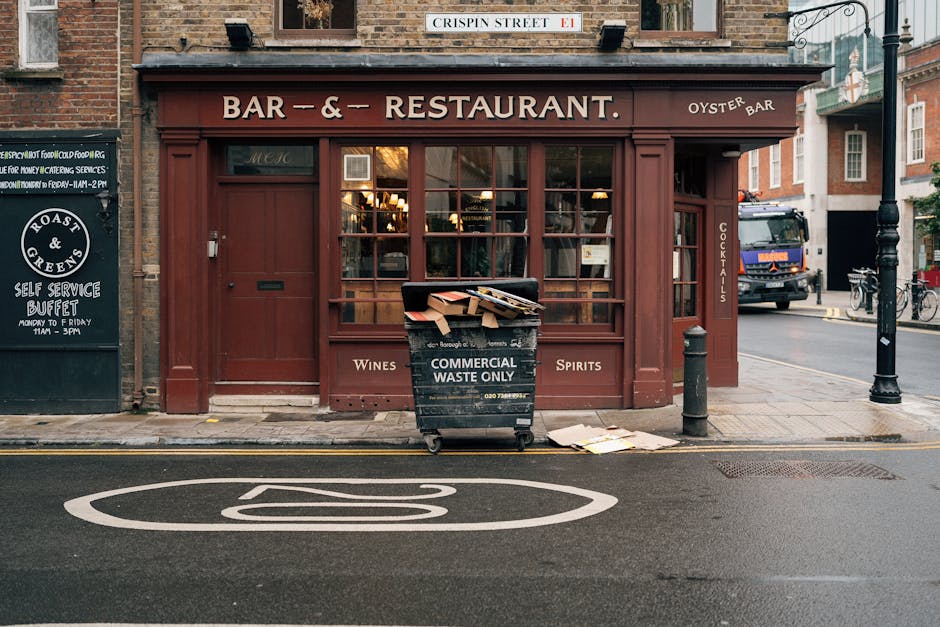
Fulham Broadway rubbish removal guide for flats SW6
If you live in a flat near Fulham Broadway, rubbish removal can feel oddly complicated for something so ordinary. One week it is a broken wardrobe, the next it is a hallway full of flat-pack packaging, old bedding, or a fridge that absolutely will not squeeze through the front door without a bit of planning. This Fulham Broadway rubbish removal guide for flats SW6 is designed to make the whole process clearer, calmer, and far less annoying.
Whether you are clearing out before a move, dealing with bulky furniture, or simply trying to get your flat back under control, the right approach saves time, reduces hassle, and helps you avoid mistakes that can turn a simple job into a messy one. Let's face it, nobody wants to carry a sofa down three flights of stairs twice.
In this guide, you will find practical advice on how flat rubbish removal works in SW6, what to check before booking, how to choose the right service, and which items need extra care. You will also find a checklist, a comparison table, and some straightforward answers to the questions people in Fulham ask most often.
Why Fulham Broadway rubbish removal guide for flats SW6 Matters
Flat living changes the rules. In a house, you might wheel items straight out the front door and be done. In a flat near Fulham Broadway, you are often dealing with shared entrances, narrow corridors, parking restrictions, stairwells, lift limits, and neighbours who do not appreciate a noisy clearance at 7 a.m. All of that makes rubbish removal less about brute force and more about planning.
The SW6 area is busy, well-connected, and full of buildings that were not designed with modern bulk waste in mind. That means the best rubbish removal approach is usually the one that fits the building, the schedule, and the item type. A small typo in planning can cost you an extra trip, an awkward conversation with building management, or a pile of rubbish sitting in your hallway longer than it should.
It also matters because different items need different handling. A stack of cardboard is one thing. A broken mattress, an old sofa, a fridge, or builders' rubble from a renovation is another. Some items can be lifted out quickly, while others need special handling for safety, cleanliness, or disposal rules. For that reason, a good flat clearance plan is not just convenient; it is genuinely safer and cleaner.
If you are doing a wider clear-out, it can help to think beyond the immediate pile. A lot of people in Fulham start with a few bulky items and end up realising they need a broader flat clearance or even a fuller home clearance. Others only need targeted help for a single category, such as furniture disposal or fridge and appliance removal.
Expert takeaway: In flats, rubbish removal is rarely just about lifting items out. The real work is in access, timing, item separation, and making sure nothing gets damaged on the way through shared spaces.
How Fulham Broadway rubbish removal guide for flats SW6 Works
Most flat rubbish removal jobs follow a simple pattern, even if the building itself makes it feel more complicated. First, you identify what needs to go. Then you decide whether it is a small mixed load, bulky furniture, white goods, or a more general household clearance. After that, the collection is arranged around access, parking, and the amount of labour needed.
For flats, access is usually the main variable. Is there a lift? Does it fit a sofa or mattress? Is there a shared stairwell with tight turns? Can a vehicle stop close enough to keep loading efficient? These little questions matter more than people expect. A job that looks like "just a few bags" can become slow if every item has to be carried a long way.
In practice, rubbish removal for flats often works best when items are sorted before collection day. This avoids delay and makes recycling easier too. If you mix furniture, electrical items, and general rubbish together without thinking, the collection team may need to separate them on-site. That is fine sometimes, but it is not the neatest or fastest option.
For larger or more mixed clearances, a specialist waste removal service can be a better fit than a one-size-fits-all approach. You can read more about that through the site's waste removal service, and if you are dealing with a bulkier flat inventory, furniture clearance may be the more sensible route. Truth be told, a lot depends on what is actually leaving the property.
There is also a quality difference between "remove the stuff" and "remove the stuff properly". Proper removal means care in the hallway, sensible handling in communal areas, and an eye on recycling and disposal. That is where planning pays off.
Key Benefits and Practical Advantages
The biggest benefit of organised rubbish removal in a flat is simple: you get your space back without the stress of doing everything yourself. But the advantages go further than that.
- Less time wasted: No need to make repeated trips to a local site or wait around for an unclear collection arrangement.
- Safer handling: Heavy or awkward items are moved with proper lifting and practical judgment, which matters in stairwells and tight hallways.
- Better neighbour relations: A tidy, swift collection is far less disruptive than dragging items out bit by bit over several days.
- Cleaner shared spaces: Communal entrances, lifts, and corridors stay more presentable.
- More effective sorting: Reusable, recyclable, and non-recyclable items can be separated more sensibly.
There is a psychological benefit too, though people rarely say it out loud. Once the clutter is gone, the flat feels bigger, quieter, and less mentally noisy. You notice the room again. The light comes back. A small thing, maybe, but a real one.
If you are clearing a rental flat before moving out, or preparing a place for sale, the appearance of space can make a big difference to how the property feels. And if your situation involves a specific item type, such as an awkward mattress or sofa, the dedicated mattress and sofa disposal page is worth a look.
Who This Is For and When It Makes Sense
This guide is useful for anyone living in or managing a flat around Fulham Broadway, but it is especially relevant if you are dealing with one of these situations:
- moving out of a rented flat and needing a quick clear-out
- downsizing and getting rid of surplus furniture
- clearing post-renovation waste after a light refit
- disposing of old appliances that are too heavy for standard bin collection
- emptying a flat after a change in occupancy
- handling a landlord, agent, or building-manager deadline
- removing garden-related clutter from a balcony or terrace
It also makes sense if you are not quite sure what category your rubbish falls into. That happens more often than you might think. Someone has a half-dismantled wardrobe, a broken desk, a pile of cardboard, and an old microwave. Is that household rubbish? Furniture waste? Electrical waste? A mix of all three? Usually, yes.
For landlords and letting agents, speed and consistency are often the priority. For tenants, avoiding extra charges or missed deadlines may matter more. For homeowners, the goal might simply be a stress-free clear-out before the weekend disappears into boxes and dust. Different needs, same basic problem.
And if the job involves more than just a few pieces, it may be better to think in terms of a house clearance style approach, even if the property is a flat. That sounds odd at first, but the logic is the same: assess the volume, access, and item mix before choosing the method.
Step-by-Step Guidance
Here is a practical way to approach rubbish removal from a flat in SW6 without overcomplicating it.
- Walk through the flat room by room. Make a quick list of what is staying and what is leaving. Be honest. Half-finished piles can linger for weeks if you do not commit.
- Separate items by type. Keep furniture, electrical items, general waste, and anything potentially hazardous apart. This makes the collection safer and more efficient.
- Check access first. Measure awkward items against door widths, stair turns, lift sizes, and hallway corners. A tape measure can save a surprising amount of swearing.
- Decide what needs specialist handling. Fridges, mattresses, sofas, and anything suspect should be identified early. If in doubt, treat it cautiously.
- Clear the route. Move lamps, shoes, plant pots, and anything fragile out of the way. It sounds obvious, but people forget this part all the time.
- Book the collection for a sensible time. If your building is busy in the morning, a quieter slot can make life easier for everyone.
- Keep building rules in mind. Some properties have loading restrictions or management rules for use of lifts and communal areas.
- Do a final sweep. Check cupboards, balcony corners, and under-bed storage before the team arrives. That is where the "oh, I forgot that" items always hide.
If you are clearing renovation debris rather than household clutter, the same process applies, but with extra attention to heavy waste and sharp materials. For that scenario, builders waste clearance can be the better fit.
One small but important habit: take photos of larger items before the collection, especially if you are working to a deadline or moving through a managed building. It keeps everyone on the same page. Not glamorous, but useful.
Expert Tips for Better Results
After plenty of clearance jobs, a few patterns become very clear. The people who get the smoothest result tend to do the boring bits well. And boring bits, in rubbish removal, are usually the difference between easy and annoying.
- Label piles clearly. A simple "keep", "donate", "recycle", and "remove" split avoids confusion on the day.
- Keep stairs and landings clear. Even a small obstacle can slow everything down in a narrow building.
- Think about noise. Early-morning scraping and dragging is never ideal in a block of flats. Common sense helps.
- Choose the right level of service. Do not pay for more than you need, but do not under-book either. Somewhere in the middle usually works best.
- Ask about recycling handling. A responsible collection should aim to separate reusable and recyclable materials where possible.
Here is a tiny real-world moment: a resident near Fulham Broadway once discovers, ten minutes before collection, that the old chest of drawers would not fit through the hallway unless the handles came off first. Five minutes later, problem solved. That sort of thing happens constantly. The job is often less about force, more about patience and a screwdriver.
Another good tip is to keep one bag aside for items you are not yet sure about. If it is not truly rubbish, do not send it away by mistake. People regret that later, usually on a Sunday evening when they realise the "junk" bag contained the one cable they still needed.
If you are dealing with confidential paperwork while clearing a home office corner, confidential shredding is the more appropriate route than simply binning documents. It is a small detail, but a sensible one.
Common Mistakes to Avoid
Most clearance problems come from a few predictable mistakes. Avoid these and the job becomes much easier.
- Leaving everything until the last minute. Rushing creates mistakes, damage, and stress.
- Underestimating access issues. A sofa that looks manageable in the living room can become a nightmare at the stair bend.
- Mixing too many item types together. This slows sorting and can create issues with disposal.
- Ignoring building rules. Some flats need advance notice for larger collections or loading access.
- Forgetting about specialist waste. Electrical items, fridges, and certain materials should not be treated like ordinary rubbish.
- Choosing price alone. Cheapest is not always cleanest, safest, or best organised. Surprise, surprise.
Another common slip is assuming that anything "old" can go out with general waste. Not quite. Some items need a different route, particularly if they contain electrical components, refrigerant, or materials that should be handled carefully. When in doubt, ask before the collection day arrives.
For damp smells, stains, or items that have been stored too long, it is often better to remove them sooner rather than later. Nobody wants a flat to smell faintly of the back of a cupboard.
Tools, Resources and Recommendations
You do not need a van-load of equipment to organise rubbish removal from a flat, but a few simple tools can make the process smoother.
- Tape measure: useful for doors, lifts, and awkward furniture.
- Marker pen and labels: helpful for sorting and separating piles.
- Strong bin bags or rubble sacks: especially for mixed light waste.
- Gloves: basic but worthwhile when handling dusty or sharp items.
- Phone camera: handy for documenting items or sharing access details.
- Basic screwdriver or Allen key set: ideal for dismantling flat-pack furniture before removal.
Useful service pages on the site can help you narrow down what you need. For example, if the flat contains old seating or dining pieces, furniture clearance and furniture disposal are practical starting points. If the pile is mixed and broader, flat clearance may be the simpler overall option.
For special waste streams, the following pages are worth checking depending on what you have:
- hazardous waste disposal for items that need careful handling
- fridge and appliance removal for white goods
- mattress and sofa disposal for bulky soft furnishings
- recycling and sustainability if you want the greener angle explained clearly
Sometimes the best tool is simply a bit of decision-making discipline. Which items are truly waste? Which can be reused? Which need special handling? That alone clears up a lot.
Law, Compliance, Standards, or Best Practice
When rubbish removal touches flat buildings, safety and responsible disposal matter. You do not need to become a regulations expert, but it does help to follow accepted UK waste practices and use a reputable provider that handles items properly.
In practical terms, that means waste should be collected, transported, and disposed of with care. Materials should be separated where sensible, hazardous or specialist items should not be mixed with normal rubbish, and shared building areas should be treated respectfully. That is the baseline. Nothing flashy, just proper conduct.
It also makes sense to check that the provider you are using has clear policies around safety and security. On this site, useful references include health and safety policy, insurance and safety, and payment and security. Those pages help build confidence before you book.
For business-related clearances in or around a flat-based office, it may also be relevant to review business waste removal or office clearance if your situation is more commercial than domestic. Small note, but important: not all waste jobs are the same, even if they look similar at first glance.
Where possible, best practice also means reducing waste in the first place. If a usable item can be donated, passed on, or reused, that is often a better outcome than sending it straight for disposal. Practical and decent, which is a nice combination.
Options, Methods, or Comparison Table
If you are deciding how to handle rubbish removal from a flat in SW6, the main options usually come down to doing it yourself, using a small-man-and-van style collection, or booking a fuller clearance service. The right choice depends on volume, access, time, and item type.
| Method | Best for | Advantages | Trade-offs |
|---|---|---|---|
| DIY removal | Very small loads and light items | Maximum control, flexible timing | Time-consuming, physically awkward, multiple trips |
| Partial collection | Bulky items or a moderate mixed load | Faster than DIY, good for one-off clearances | Needs clear access planning and good sorting |
| Full flat clearance | Whole-flat clear-outs or major decluttering | Most efficient for larger jobs, less stress | May be more than needed for a very small job |
| Specialist item removal | Sofas, mattresses, fridges, appliances | Handled more appropriately, safer for difficult items | May require more detail when booking |
If you are unsure which option fits, start with the item mix and access conditions. That usually answers the question faster than anything else. A two-bedroom flat with a lift and three bags is a very different job from a top-floor flat with a broken wardrobe and a fridge, after all.
Case Study or Real-World Example
Here is a realistic example. A resident in a SW6 flat is moving out at the end of the month. The flat contains a bed frame, a mattress, two bookshelves, a small fridge, several bags of mixed household waste, and a box of old cables, chargers, and paperwork. The lift is small, the stairwell turns sharply, and the building has neighbours working from home.
The first mistake would be trying to tackle it item by item over a week. That creates clutter in the hall, noise at odd times, and plenty of "I'll deal with it later" moments. The smarter move is to sort the items by type, confirm what needs specialist handling, and arrange one clear collection window.
In that scenario, the mattress and sofa items would be separated from the mixed rubbish, the fridge would be flagged for appliance removal, and the paperwork would be set aside for secure destruction. Furniture would be assessed for dismantling before collection. Then the route from flat to vehicle would be cleared. Simple on paper. Much better in reality.
The result is usually a quieter exit, a cleaner flat handover, and far less stress on moving day. Not glamorous, sure, but a massive relief.
That sort of organised approach is often what separates a messy clear-out from one that feels surprisingly easy.
Practical Checklist
Use this checklist before rubbish removal day in a Fulham Broadway flat.
- List every item that needs to go
- Separate furniture, general waste, electrical items, and special items
- Check stair access, lift size, and hallway turns
- Remove fragile items from the route
- Confirm any building rules or time restrictions
- Set aside documents for shredding if needed
- Decide whether appliances need specialist handling
- Bundle smaller items together where practical
- Take a quick photo of larger loads for reference
- Do a final room-by-room sweep before the team arrives
If you are clearing more than one area, it can help to think in zones: bedroom, living room, kitchen, storage, and balcony. That keeps the job tidy and stops small items from being forgotten in random corners.
Get a free quote today and see how much you can save.
Conclusion
Rubbish removal in a Fulham Broadway flat does not need to be a headache. Once you understand access, item type, and the difference between ordinary rubbish and specialist waste, the whole thing becomes much easier to manage. A bit of planning at the start saves time, reduces disruption, and keeps your flat and communal areas in better shape.
The key is to be realistic. Small loads can often be handled simply. Larger or mixed clearances need a more considered approach. And awkward items, like fridges, sofas, mattresses, or renovation waste, deserve extra attention. Nothing dramatic. Just sensible, calm organising.
If you want a smoother result, choose the right service for the job, clear the access route, and sort the items before collection day. It sounds plain, but plain works. And in busy SW6 flats, plain is often exactly what you need.
A well-cleared flat has a quiet kind of relief about it. You notice it in the extra space, the easier movement through a room, and even the sound of the place settling down again.
Frequently Asked Questions
What is the best way to arrange rubbish removal from a flat near Fulham Broadway?
The best way is to sort items first, check access, and choose a service based on the amount and type of waste. For small loads, a simple collection may be enough. For mixed or bulky items, a fuller flat clearance approach is usually better.
Do I need to separate furniture, appliances, and general rubbish before collection?
Yes, if you can. Separation makes the job smoother and can help with recycling or specialist disposal. It also avoids confusion when someone turns up to move items out of a narrow hallway at speed, which is not the moment to be guessing.
Can rubbish removal be done in a building with a small lift?
Usually yes, but the lift size matters. If furniture or appliances will not fit, they may need to be carried via stairs or dismantled first. Always check measurements before collection day.
What items are commonly removed from flats in SW6?
Typical items include sofas, mattresses, wardrobes, boxes, old kitchen appliances, broken furniture, and mixed household waste. Some flats also have balcony clutter, office items, or renovation leftovers.
Is furniture disposal different from general rubbish removal?
Yes. Furniture is bulky, often awkward to carry, and sometimes needs dismantling. That is why dedicated furniture disposal or furniture clearance can be more practical than treating it as general waste.
What should I do with a fridge or washing machine?
Appliances should be handled separately, as they often need specialist collection and disposal. A proper appliance removal service is the sensible option, especially for fridges and other white goods.
How far in advance should I plan a flat clearance?
As early as possible if you have a deadline, especially for moving out or handing back keys. Even a few days of planning can make a big difference, and it keeps the job from becoming a last-minute scramble.
Can I put everything into one pile and let the team sort it out?
Sometimes yes, but it is better to sort where possible. Mixed piles take longer to handle and can make it harder to separate items for recycling or specialist disposal.
What if I only have a few bags and one bulky item?
That is a very common situation. In that case, a partial collection or targeted item removal is often more efficient than booking a larger clearance than you need.
Are there any items I should treat as hazardous?
Yes. Certain chemicals, batteries, some electrical waste, and damaged items with unknown contents may need special handling. If something seems questionable, do not mix it with regular rubbish.
Can rubbish removal help if I am getting a flat ready for new tenants?
Absolutely. A clean, empty flat is much easier to photograph, clean, and hand over. It is also a better first impression for incoming tenants, which matters more than people sometimes admit.
Where can I learn more about responsible recycling and disposal?
The site's recycling and sustainability page is a useful place to start if you want a clearer view of how waste can be handled more responsibly.